You Made Me Feel Emotions Again

Many people with disabilities seek support from service animals. In addition to providing companionship, service animals are trained to perform tasks, from providing stability to picking up items to alerting individuals about environmental hazards.
Still, in recent years, emotional support animals have likewise become more prominent. While both offer support, there are stark differences between the two — especially when it comes to legal protections and training. Hither, we'll delve into the differences betwixt service animals and emotional support animals, from the types of services they provide to the training they require.
How Emotional Support Animals Help People with Mental Illnesses and Disorders
An emotional back up brute (ESA) is an animal companion that helps support an individual who is living with a mental illness or disorder. Most often, individuals ESAs are dogs, merely other animals, from cats to miniature horses to lizards, can all provide emotional support and companionship. By providing companionship, these animals provide a sense of comfort for people with feet or depression. ESAs can also help folks who experience panic attacks or who live with anxiety disorders, such every bit post-traumatic stress disorder (PTSD) or obsessive-compulsive disorder (OCD).

Under the Americans with Disabilities Act (ADA), emotional support dogs are not technically considered service dogs. While ESAs tin can exist trained to support their owner, they don't usually receive professional preparation, nor do they perform particular tasks. That is, providing comfort, while of import, doesn't qualify as a service.
While ESAs no longer take legal protections on airplanes, many tin can receive certifications then that there's no conflict with an individual's housing situation. Moreover, psychiatric service dogs, who are trained to perform tasks that mitigate a person's psychiatric condition, such equally PTSD, differ from ESAs and have more protections.
Legal Protection Is Express for an Emotional Support Animal (ESA)
With emotional support animals becoming more mutual, patients often request messages of documentation supporting their need for an animate being from their psychologist, therapist, or physician. This official documentation of diagnosis is helpful to have on hand equally validation, merely, unfortunately, ESAs and their owners nonetheless face limited legal protections and rights in public places.

While the ADA covers trained, professional person service animals, information technology does not extend to emotional support animals. In practice, this ways that individuals with ESAs don't take unlimited access to public spaces. Depending on their own policies, businesses reserve the right to deny services to those with emotional support animals. As of Jan 2021, airlines are no longer required to arrange ESA owners, for case.
However, the Fair Housing Human activity (FHA) requires landlords to allow renters to go on emotional back up animals in their residence — fifty-fifty if pets aren't allowed in the building. Nether the FHA, landlords or holding owners cannot crave tenants to pay additional fees for ESAs. Additionally, they tin't inquire for all-encompassing information about a person's disability or asking their medical records, nor tin can they crave that the animal have specific training.
Preparation Is a Must for Service Animals
Unlike ESAs, service animals are individually trained to perform specific tasks for people with physical, sensory, psychiatric, intellectual, and/or mental disabilities. For example, guide dogs assist blind and low-vision individuals navigate public spaces as well as their homes. Service animals can as well help open doors, carry items and accomplish objects their owners may not be able to reach. Some of these trained animals tin recognize the signs of seizures and will stand guard over their owner or try and find them help.
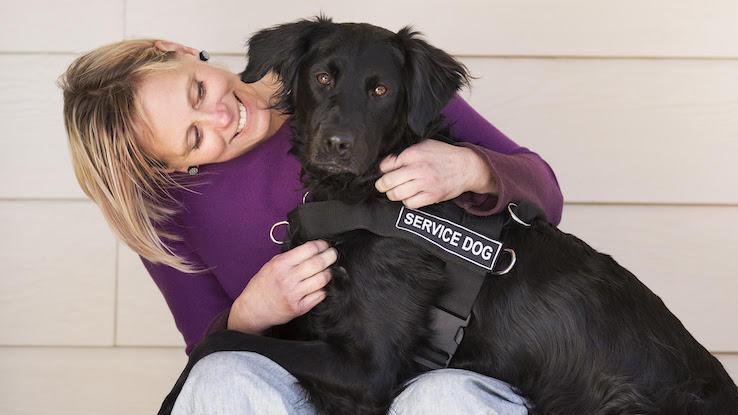
The Americans with Disabilities Act (ADA) does non require service dogs to exist professionally trained, though it'south certainly helpful. Individuals with disabilities can train their animals themselves, but sometimes professional training can become a long way. After all, information technology'south of import for service animals to remain calm, alert, and reliable, especially in unfamiliar settings.
Again, most service animals are dogs, and it can accept up to two years for a domestic dog to be considered "properly trained" equally a service animal. If you need assistance finding a service canis familiaris, service domestic dog agencies can help you notice an animal whose training aligns with the back up you demand. In public spaces, some service animals may wear special vests, harnesses, collars, or tags that identify their status as working dogs.
Service Animals Have Legal Protections
Under the Americans with Disabilities Deed, service animals have many more legal protections than emotional support animals. Namely, this is because service animals are needed throughout the 24-hour interval to assist with physical tasks. As a result, these animals get pretty much anywhere without the fear of being denied access.

Yep, service animals can be brought into restaurants, stores, libraries, and other public spots, even if pets aren't immune. Service animals are even permitted on flights — though, typically, they must sit on the traveler'due south lap or at their feet. Though these animals tin can certainly be affectionate companions, they aren't exactly pets. After all, service animals are working animals, and they accept very important jobs to practice.
Just like with emotional back up animals, individuals with service animals tin can acquire certifications wherein a doctor or mental health professional writes a letter that states their diagnosis and the way an animal will be beneficial.
Dog Breeds That Make Great Emotional Support and Service Animals
Certain dog breeds make great emotional back up and/or service animals based on their dispositions. Labrador retrievers, for example, are one of the most popular dog breeds when it comes to providing assistance, namely because they are naturally friendly, obedient and helpful. As yous might await, aureate retrievers are much the aforementioned.

Although known for being protective baby-sit dogs, German shepherds also make great service animals. Well-behaved and like shooting fish in a barrel to train, their size, strength, and attention to item brand them a great choice. Another great choice? The edge collie. This intelligent herding breed enjoys being given a task, though they may have a petty more excess free energy than the other breeds on this listing.
Resource Links:
- "How Long Does it Take to Train a Service Dog?" via Official Service Domestic dog, Therapy Dog & Emotional Support Brute Registry
- "Which Breeds Make the Best Service Dogs?" via K9 of Mine
- "Service Dogs, Working Dogs, Therapy Dogs, Emotional Support Dogs: What'southward the Difference?" via American Kennel Gild (AKC)
- Often Asked Questions (FAQ) | The Americans with Disabilities Act (ADA) via The U.S. Department of Justice
- "No, the Off-white Housing Act of 1968 Didn't End Housing Discrimination in the U.Due south." via Reference
Source: https://www.symptomfind.com/healthy-living/emotional-support-animal-vs-service-animal?utm_content=params%3Ao%3D740013%26ad%3DdirN%26qo%3DserpIndex

Enviar um comentário for "You Made Me Feel Emotions Again"